Why Do So Many YouTube Thumbnails Have Shocked Faces?
In 2008, YouTube stopped offering thumbnails from the 25, 50 and 75 percent marks of a video and let partners upload their own. What followed was YouTube Face: why faces took over, why they looked shocked, how A/B testing pushed even MrBeast to close his mouth, and five lessons for your own videos.
Aditya Challa7 min read
Explore the product
Want help making YouTube thumbnails and titles that match your video?
We haven't tested VidRankr. Its own page says it isn't ideal for live streamers, gaming channels or non-English creators, and it doesn't guarantee rankings or views.
In December 2008, YouTube stopped letting ordinary users pick thumbnails from frames taken 25%, 50% and 75% of the way through their videos, because people had learned to plant eye-catching or misleading images at exactly those points, the Los Angeles Times reported at the time. In the same change, YouTube partners got the ability to upload a custom image as their thumbnail, one that "doesn't even have to come from the video."
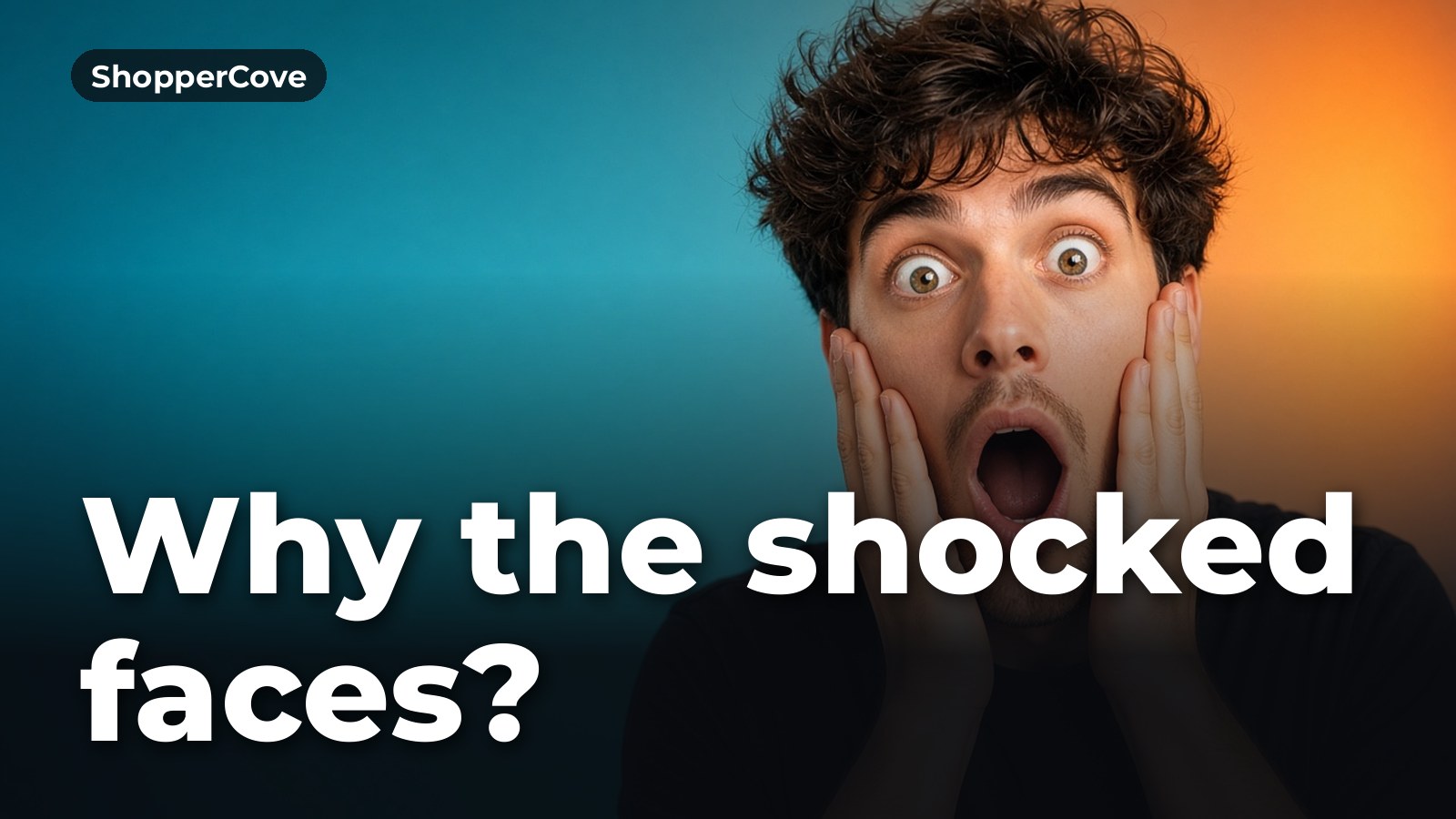
That small change set off one of the internet's most recognisable visual styles: the wide-eyed, open-mouthed "YouTube Face". Here's how YouTube thumbnails went from random video frames to shocked faces, why the look spread, why it's now fading in some corners, and what that history means if you make videos for your own products or channel.
Before custom thumbnails
YouTube's domain went live on 14 February 2005, and the first video, "Me at the zoo", was uploaded on 23 April 2005. In those early years the thumbnail was mostly an afterthought: a frame pulled automatically from the video.
The fixed 25-50-75 system was easy to game, so in January 2009 Google's computer vision team explained the replacement on its research blog. It said the old method "often led to arbitrary, uninformative or sometimes even misleading images", and that YouTube would now use an algorithm to pick images that were "visually representative of the content of the video." At the time, YouTube was receiving as much as 13 hours of video every minute, so nobody could choose thumbnails by hand.
Custom thumbnails then spread slowly. In August 2012, YouTube announced it was expanding custom thumbnails to more partners who had been active for 30 days and were in good standing. The same post carried a warning that still shapes thumbnails today: YouTube would favour videos whose thumbnails "help drive viewers to actually watch them, over videos that are clicked and then quickly abandoned", and it asked partners to upload images that were representative of the video.
Why faces took over
Once creators could design their own thumbnails, many found that putting a person in the image helped.
Rene Ritchie, a longtime tech creator who is now YouTube's head of editorial, told The Ringer in 2026 that when he started showing his face, "people engaged with it." He compared it to magazines putting a person on the cover or books showing the hero: "There's just something relatable in humans that we put up front to make that connection."
Size mattered too. Thumbnails usually appear small on screen, so Chucky Appleby, who has made MrBeast's thumbnails since 2019, told The Ringer he enlarged Jimmy Donaldson's face in the frame as much as possible. He also saw it as branding: a recognisable face that viewers learned to trust if the video delivered what the thumbnail promised.
Why the faces looked shocked
The exaggerated expression has a few likely roots.
Reaction videos. The Ringer traces the open-mouthed look partly to the popularity of reaction channels in the 2010s, where people filmed themselves reacting to games, food and other videos. It links that genre back to TV formats such as Candid Camera and the "waipu box" on Japanese game shows, the small inset of someone reacting while the audience watches.
Curiosity. In a 2018 essay for SFMOMA's Open Space, writer Joe Veix described YouTube Face as an exaggerated overreaction to a video's subject and suggested it was "perhaps manipulating some kind of primal feeling of empathy or morbid curiosity in the pain of others."
Copying the leader. MrBeast's channel had roughly 14 million subscribers when Appleby started making its thumbnails in 2019 and 112 million by November 2022, according to The Ringer. When the biggest channel on the site used a look, others copied it. One creator quoted in the piece put it bluntly: "what would be safer than copying the biggest YouTuber in the world?"
The backlash and the closed mouth
As the look spread, The Ringer notes, it became a source of obvious irritation for creators and viewers alike, and creators themselves started questioning it.
Testing changed the conversation. In September 2023, The Verge reported that MrBeast had shared YouTube dashboard screenshots showing that thumbnails where his mouth was closed, generally smiling, beat open-mouthed versions on watch time. At that point YouTube's A/B testing feature was available to only "a few hundred creators". Donaldson later summed it up: "Every A/B test, less cringe expression won."
Other testing points the same way. Upstream, a thumbnail tool, reports that in its tests closed-mouth expressions won more often than open-mouthed ones and that natural, mid-action expressions beat posed ones. Treat that as one vendor's experience, not a controlled study.
And faces aren't a rule. Derek Muller of the science channel Veritasium, which has about 20 million subscribers, told The Ringer: "I think we've done some internal research and not found faces to be that important."
Is YouTube Face just clickbait?
Not necessarily. Wikipedia defines clickbait as a text or thumbnail link designed to entice clicks that is "typically deceptive, sensationalized, or otherwise misleading." A shocked face is clickbait only if the video doesn't deliver.
YouTube says its own system is built around that difference. Its Test & Compare tool, covered in its help pages, picks a winning title or thumbnail by watch time share rather than click-through rate alone. As Ritchie put it to The Ringer: "the thumbnail that makes the best promise that the video then delivers on is the one that we measure as the winner for you."
What this history means for your videos
If you make product demos, tutorials or a small channel, the lessons are fairly simple:
- A thumbnail is a promise. Since 2012, YouTube has said it favours thumbnails that lead to real watching, so match the image to what the video actually shows.
- A face can help, but it's optional. Use one if you're the brand. If the product or result is the point, show that clearly instead.
- Pick a real expression. Recent testing suggests a natural smile or a focused look often beats a forced scream.
- Test instead of guessing. Where you have access, YouTube's built-in testing measures watch time, not just clicks.
- Design for small screens. Big subject, high contrast, very few words.
We explain the tools and specs in the next part of this series, how YouTube thumbnails are made today. After that, we ask whether YouTube thumbnails still matter in 2026 and what YouTube would look like with no thumbnails at all. If you're making the video itself, our series on how whiteboard animation videos started covers another format that grew up online, and our product page video checklist covers using video to sell.
How this was made: facts were gathered on 8 Oct 2026 (IST) from the Los Angeles Times (2008), Google Research (2009), the YouTube Blog (2012), YouTube Help, Wikipedia's History of YouTube and Clickbait articles, The Ringer (2026), The Verge (2023), SFMOMA's Open Space (2018) and Upstream, then written up with AI help and checked line by line against those sources.
Sources
- 01latimes.com/archives/blogs/technology-blog/story/2008-12-09/youtube-more-thumbnail-selection-for-partners-less-for-everyone-else
- 02research.google/blog/smart-thumbnails-on-youtube/
- 03blog.youtube/news-and-events/expanding-custom-thumbnails-to-more/
- 04en.wikipedia.org/wiki/History_of_YouTube
- 05theringer.com/2026/03/09/pop-culture/youtube-face-thumbnails-history-explained
- 06openspace.sfmoma.org/2018/04/your-pretty-face-is-going-to-sell/
- 07theverge.com/2023/9/6/23861576/youtube-face-mrbeast-open-closed-mouth-a-b-testing-thumbnail
- 08upstream.so/blog/open-mouths-and-youtube-thumbnails/
- 09en.wikipedia.org/wiki/Clickbait
- 10support.google.com/youtube/answer/13861714?hl=en
Related
Lab evidence
What I found running this
Facts checked 8 Oct 2026 (IST) against the LA Times (2008), Google Research (2009), the YouTube Blog (2012), YouTube Help, Wikipedia, The Ringer (2026 interviews), The Verge (2023), SFMOMA Open Space and Upstream (vendor tests, labelled). Origins of YouTube Face are presented as likely roots, not settled fact. We did not test VidRankr ourselves; claims come from its sales page.
Keep reading
Synthesia Syren Launches Oct. 9: What On-Brand AI Video Means for Sellers and Creators
Synthesia launches Syren on Oct. 9, a video engine that learns colors, fonts, motion and pacing from your existing videos and builds on-brand videos from a prompt. What Synthesia has published, which claims are still marketing, the waitlist bonus terms for US users, current plan costs, and seven steps for sellers and creators testing it.
News8 Oct 20267 min read
Do Whiteboard Animation Videos Still Work in 2026? What the Research Actually Says
Whiteboard videos get credit for better learning, more attention and more sales. The research backs the first two in short online experiments, with real caveats: not every study beats slides, the drawing hand may not matter, novelty is unsettled and sales evidence is mostly surveys. What the studies tested and when the format makes sense.
News8 Oct 20268 min read
AI Influencers Took Over Feeds This Week: What Creators and Brands Should Do
Semafor reported on Oct. 7 that Higgsfield updated its AI influencer tool, while an AI comedian account on Instagram was accused of copying real comics' jokes. What happened, what YouTube's AI disclosure rules and the FTC's endorsement guidance say, and seven steps for creators and brands before building or hiring an AI influencer.
News8 Oct 20267 min read