How Are Amazon Product Listings Made Today?
Since 27 July 2026, most Amazon titles must fit in 75 characters, with a new 125-character Item Highlights field. What a listing is made of today, from title and images to search terms and A+ content, how AI moved into the work since 2023, a nine-step workflow and what still needs a human check.
Aditya Challa7 min read
Explore the product
Want a first draft of your whole listing from one photo?
Credit-based pricing, and we haven't tested it ourselves. Always check AI copy against Amazon's rules before going live.
Since 27 July 2026, Amazon product titles in every category except media have had to be 75 characters or less, including spaces, with a separate 125-character Item Highlights field alongside, according to Amazon's announcement on its Seller Forums. In a follow-up post, Amazon said sellers had updated more than 984 million product titles since the change was announced in June.
That one rule change says a lot about how listings are built in 2026: more structure, tighter limits and a growing amount of AI help, from Amazon and from outside tools. Here's what a listing is made of today, how the work gets done and where people still need to check things by hand.
What an Amazon listing is made of
A listing looks like one page, but it's a set of separate fields, each with its own rules.
The title (Item name). Under the 2026 rules the title is 75 characters including spaces. Amazon's earlier title policy, which took effect on 21 January 2025, also bans the characters !, $, ?, _, {, }, ^, ¬ and ¦ unless they're part of the brand name, and says a title can't use the same word more than twice, apart from prepositions, articles and conjunctions. Amazon recommends keeping the brand name in the title.
Item Highlights. The new field adds 125 characters for things like materials or recommended uses. Amazon says both fields count for search and "one isn't prioritized over the other", and that from 10 August 2026 Item Highlights display beneath the title on desktop and mobile. Altogether you still get 200 characters, split 75 and 125.
Images. The main image must be on pure white, RGB 255, 255, 255, with the product filling 85% to 100% of the frame, according to an Amazon staff post on 2026 photo standards. We explain the history behind that rule in why Amazon product photos have white backgrounds. The other image slots can show the product in use.
Bullet points and description. These carry the detail: what it does, what it's made of and who it's for. Amazon itself has described writing compelling "product titles, bullet points, and descriptions" as something that "previously required significant work for sellers".
Search terms. Behind the scenes there's a Generic Keyword field. An Amazon staff post says search terms "should be less than 250 bytes long" and warns that if the limit is exceeded, "the attribute is completely ignored by Amazon Search". Bytes and characters aren't the same: Amazon's help text, quoted on the forums, says letters and numbers in English take one byte each, but characters such as a German umlaut can take two or more. Since 6 December 2023 the field has been required for 23 product types.
A+ content and video. Brand owners enrolled in Amazon Brand Registry can add A+ Content, the richer image-and-text modules lower down the page, which Amazon promotes as a way "to increase sales". We look at that claim in does Amazon A+ content still work in 2026. Product video is another option; our product page video checklist covers the basics, and how whiteboard animation videos are made today explains one low-cost format.
How listings used to be made, and what changed
For years, building a listing meant filling in each field by hand or in a large category spreadsheet. The spreadsheet route still exists: Amazon says you can download a Category Listings report, edit fields such as Item name and Item highlights, upload it through the List Your Products tool, and listings are typically updated within eight hours.
The big shift came with generative AI. In September 2023, Amazon announced at its Accelerate seller conference that sellers could type "a brief description of the product in a few words or sentences" and have Amazon generate listing content for review. Amazon said early feedback showed most of the sellers who tested it were using the generated content directly. Robert Tekiela, Amazon's vice president of Selection and Catalog Systems, gave an example of what its models do: they "can infer a table is round if specifications list a diameter".
By 2026 that AI help reached titles too. Amazon's title update offers AI-powered recommendations that fit the new limits, and says titles still over 75 characters after 27 July would be updated to the AI recommendation gradually. Brand owners get 14 days to review, change or approve those suggestions, and listings stay active and editable throughout.
A typical listing workflow in 2026
Here's how a careful seller might put a listing together today, using the fields above.
- Find the words shoppers use. Amazon's staff guidance suggests mixing short-tail keywords such as "sofa" with long-tail ones such as "red leather couch".
- Shoot or source the photos. Get a compliant main image on white, then add secondary images. Baymard found that 42% of users try to judge a product's size from its images, so include at least one that shows scale.
- Write the title within 75 characters, brand first, with the most important variation, such as size or colour, included.
- Move supporting details into Item Highlights rather than cramming them into the title.
- Write bullets and a description that answer the questions buyers actually ask.
- Fill in search terms under the 250-byte limit, remembering that going over means the whole field is ignored.
- Add A+ content and video if you're brand registered and have the material.
- Review any AI suggestions before they go live, including the ones Amazon makes to your titles.
- Localise properly for other marketplaces. If you sell in Germany or France, accented characters use more bytes, and a direct translation may not match how local shoppers search.
Studio, AI or both?
There are now three broad ways to produce a listing.
- The traditional route: a photographer for the images and a copywriter or the seller for the text. Slower, but you control every detail.
- Amazon's built-in tools: free AI suggestions for titles and descriptions inside Seller Central, which Amazon now applies to non-compliant titles itself if you don't act.
- Third-party AI tools: a growing number promise to build images and copy from a single phone photo, or to rebuild an existing listing from its ASIN, sometimes in several marketplace languages.
None of these removes the need to check the result. AI tools can produce text that sounds right but describes the product wrongly, and images that look polished but don't match what ships. The rules above still apply whoever wrote the listing, and Amazon says you can change any title or Item Highlights it recommends at any time. We compare listing tools with on-site search in Amazon listing AI vs your own site's SEO.
The rest of this series
This is part two of our series on Amazon product listings. Part one asks why Amazon product photos have white backgrounds. Part three looks at the evidence on whether A+ content still works in 2026, and part four imagines what online stores would look like with no product photos.
How this was made: facts were gathered on 8 Oct 2026 (IST) from Amazon's Seller Forums announcements and staff posts on titles, Item Highlights, search terms and photo standards, Amazon's September 2023 news post on generative AI listings, the Amazon Brand Registry page and Baymard Institute research. It was then written up with AI help and checked line by line against those sources.
Sources
- 01sellercentral.amazon.com/seller-forums/discussions/t/145b6d0f-999c-4555-896c-c694bda2e470
- 02sellercentral.amazon.com/seller-forums/discussions/t/302aaac6-6f2b-4d86-bcd2-36fe24f0e6cd
- 03sellercentral.amazon.com/seller-forums/discussions/t/533f9cf7-3b5e-4974-b523-02e4a1a42c5f
- 04sellercentral.amazon.com/seller-forums/discussions/t/1daa7e73-eef6-4abe-b38f-c665f3d94b06
- 05sellercentral.amazon.com/seller-forums/discussions/t/0283121e-841c-49f8-a8c8-5f112a1a0715
- 06sellercentral.amazon.com/seller-forums/discussions/t/0149bdb3-2056-42ce-b0bb-9eef94e3d2b8
- 07aboutamazon.com/news/small-business/amazon-sellers-generative-ai-tool
- 08sell.amazon.com/brand-registry
- 09baymard.com/blog/in-scale-product-images
Related
Lab evidence
What I found running this
Facts checked 8 Oct 2026 (IST) against Amazon Seller Forums announcements (75-character titles and Item Highlights from 27 July 2026, 984 million titles updated, 250-byte search terms), Amazon's Sept 2023 AI listing news post, the Brand Registry page and Baymard. A+ sales impact is left to post 3. We did not test Listimo ourselves; claims come from its sales page.
Keep reading
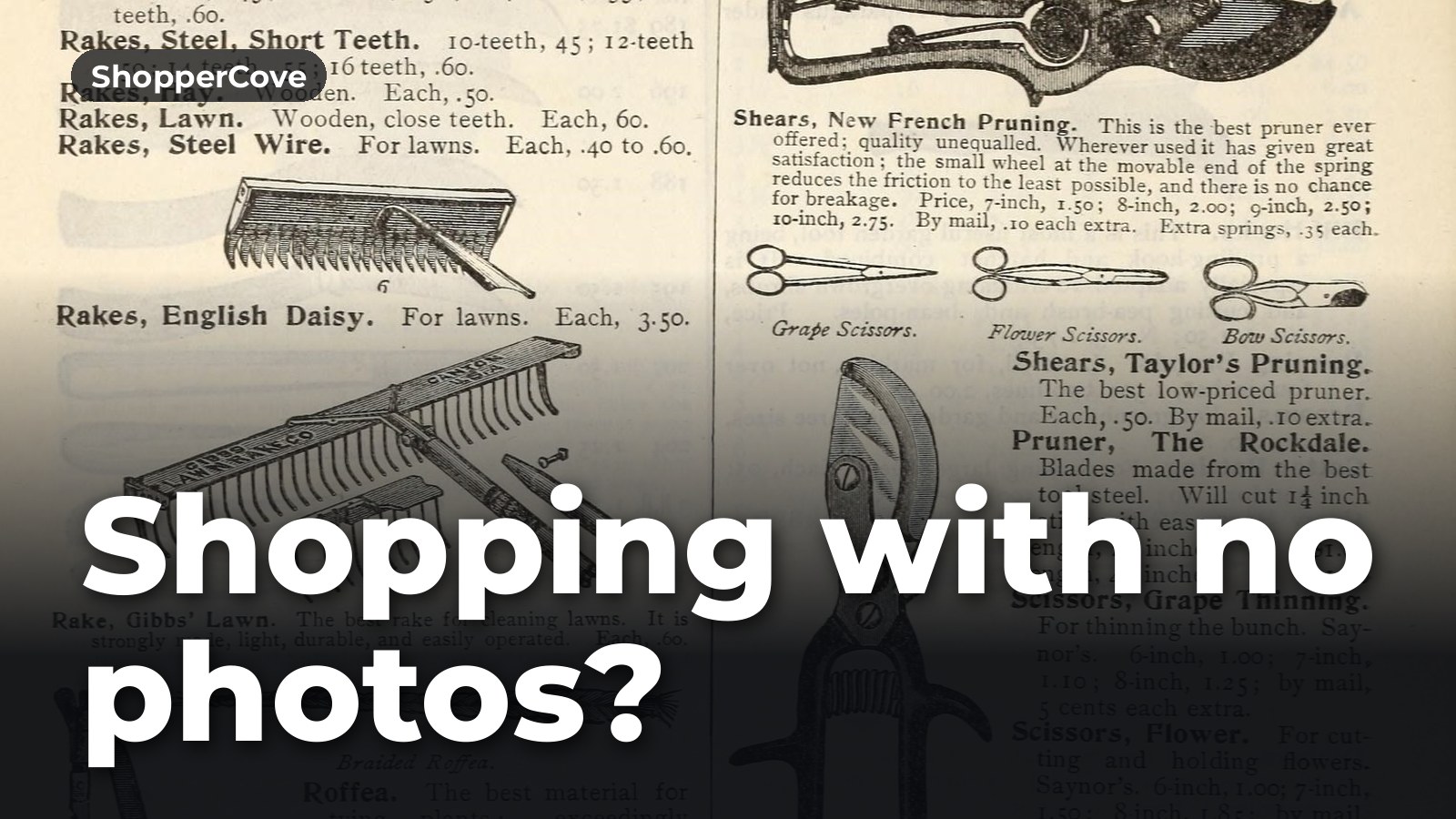
What If Online Stores Had No Product Photos?
Mail-order giants sold stoves and bicycles from words and drawings, and the early web nearly started without inline images. A grounded what-if: which products would cope without photos, which would struggle, what research says photos actually do, and five lessons for sellers today.
News8 Oct 20266 min read
Does Amazon A+ Content Still Work in 2026?
Amazon's own figures say Basic A+ Content can raise sales by up to 8% and Premium by up to 20%, but the method is unpublished. What A+ includes in 2026, what the Profitero, Salsify and Journal of Marketing research found, why product type matters and how to run your own test.
News8 Oct 20267 min read
Amazon's 'About You' Page Went Viral: What It Shows and What Sellers Should Do
Amazon's About You page, launched May 13, went viral this week after shoppers posted the blunt inferences Amazon draws from purchases, searches, lists, reviews and Alexa for Shopping chats. How the page works, how to check and edit yours, and seven steps for Amazon sellers writing listings for need-based recommendations.
News8 Oct 20267 min read