Where Did Halloween Originate? Samhain to Trick-or-Treat
From a Gaelic harvest festival to a Saturday-night costume party in 2026.
Aditya Challa3 min read
Summary
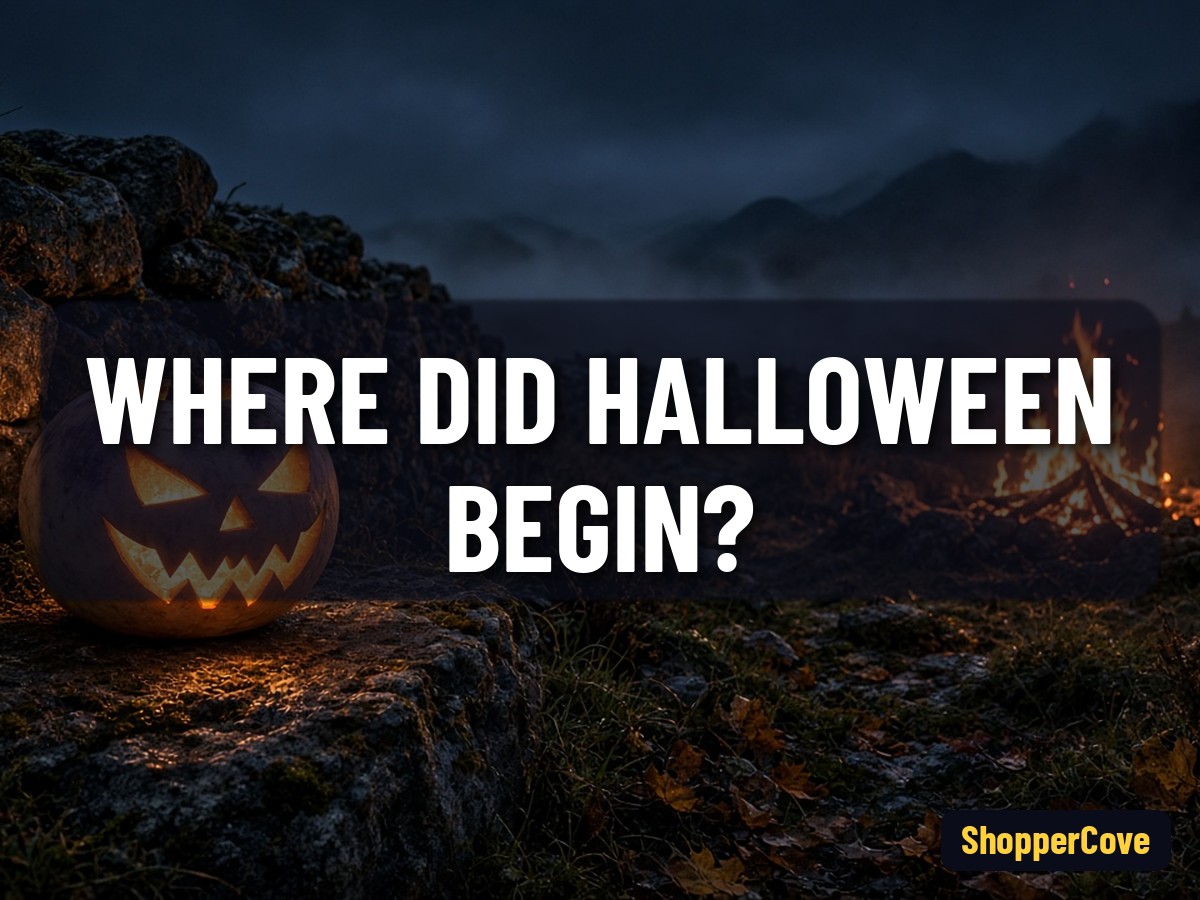
Where did Halloween originate? Historians trace it to Samhain, a Gaelic festival in Ireland and Scotland marking the end of harvest around 1 November, blended with the Christian feast of All Hallows' Eve on 31 October. Irish and Scottish immigrants carried its customs to North America in the 19th century, where it became today's costume holiday.
This post covers folklore and history. Beliefs about spirits mentioned here are traditions, not facts.
What was Samhain?
In medieval Irish literature, Samhain marks the start of winter, when the boundary between this world and the otherworld was thought to thin. Bonfires and feasting were common. Much of what is said about "Celtic" Samhain rituals is uncertain because the earliest written sources come from Christian writers centuries later.
How did All Hallows' Eve get its name?
1 November is All Saints' Day, also called All Hallows. Pope Gregory III (731–741) dedicated an oratory in Old St Peter's Basilica in Rome to all saints, and some sources say he did so on 1 November, which is why that date became All Saints' Day. The evening before became All Hallows' Eve, shortened to Hallowe'en.
Why do we carve pumpkins?
In Ireland and Scotland people carved turnips and other root vegetables into lanterns. In the United States, immigrants brought that root-vegetable carving tradition with them and switched to pumpkins. American English first applied "jack-o'-lantern" to a carved pumpkin in 1837. The name is also tied to the Irish legend of Stingy Jack, a man doomed to roam the Earth with only a hollowed turnip to light his way.
When did trick-or-treating start?
Older customs such as souling and guising involved going door to door for food in exchange for prayers, songs or jokes. The earliest known use of "trick or treat" in print is from 1917, in the Sault Daily Star of Sault Ste. Marie, Ontario. The custom spread across the United States through the 1930s, 1940s and early 1950s.
FAQ
Is Halloween a Celtic holiday? Partly. It mixes Gaelic Samhain traditions with Christian and later American customs.
What day is Halloween in 2026? Saturday, 31 October 2026.
Why do people wear costumes? Guising, dressing up while going door to door, was a Scottish and Irish custom before it spread to the US.
Related
- Where does the Bloody Mary legend come from?
- Is Dracula based on a real person?
- How to make a whiteboard video
Sources
Lab evidence
What I found running this
Facts in this draft were checked on 13 Oct 2026 against the sources listed in the body (official records, publishers, encyclopaedias and named news outlets). No original testing or reporting was done; figures are quoted as published by those sources, fiction and folklore are labelled as such, and any estimate or prediction is labelled as such.
Explore the product
Teachers, marketers and creators who want whiteboard-style videos
Explain holiday history in doodle-style videos
Make a Halloween history doodle with InstaDoodleAnimate folklore stories for spooky season
Animate a Halloween folklore short with VidToonKeep reading
What Is a Wendigo? The Algonquian Winter Legend
Folklore of the northern woods: hunger, greed and the creature horror borrowed.
Summary15 Oct 20262 min read
Where Does the Bloody Mary Legend Come From? The Folklore
The mirror game, the folklorists who studied it, and the queen it probably isn't about.
Summary13 Oct 20262 min read
What Is a Creepypasta? Origins of Internet Horror Stories
How copy-and-paste ghost stories became a whole horror genre.
Summary13 Oct 20262 min read