What If Explainer Videos Had Never Been Invented? How Products Were Explained Before
Before explainer videos there were pitchmen, chalk talks, 500-page catalogs, manuals and live demos like Ron Popeil's Chop-O-Matic and Brownie Wise's Tupperware parties. What video really added, what a world without it would look like for sellers, and what words and pictures still do better.
Aditya Challa7 min read
In 1949, a half-hour TV program demonstrating the Vitamix blender aired on New York's WOR-TV after midnight, and by 1:10 a.m., 130 orders had come in, according to Wikipedia's history of the infomercial. It's often credited as the first filmed half-hour infomercial for a product, and it was really just a demonstration with a camera pointed at it.
That's the core of every explainer video: someone showing you how a thing works so you don't have to work it out alone. So what if the format had never caught on? No product demos on video, no doodle explainers, no "in plain English" clips. It's a fun question, but it has a serious use: looking at how products were explained before video shows what video actually adds, and what words and pictures still do better.
Before video: how people explained things
Explaining products is far older than film. Sellers built whole crafts around it.
Street pitchmen. Hawkers have sold goods since antiquity, and when a hawker paired a sale with a demonstration or detailed explanation, they were called a demonstrator or pitchman. Victorian writer Henry Mayhew estimated there were 14,038 licensed pedlars in England in 1861.
The chalk talk. In the late 19th and early 20th centuries, performers drew pictures live on stage to make a point, the direct ancestor of the whiteboard video. We cover that in how whiteboard animation videos started.
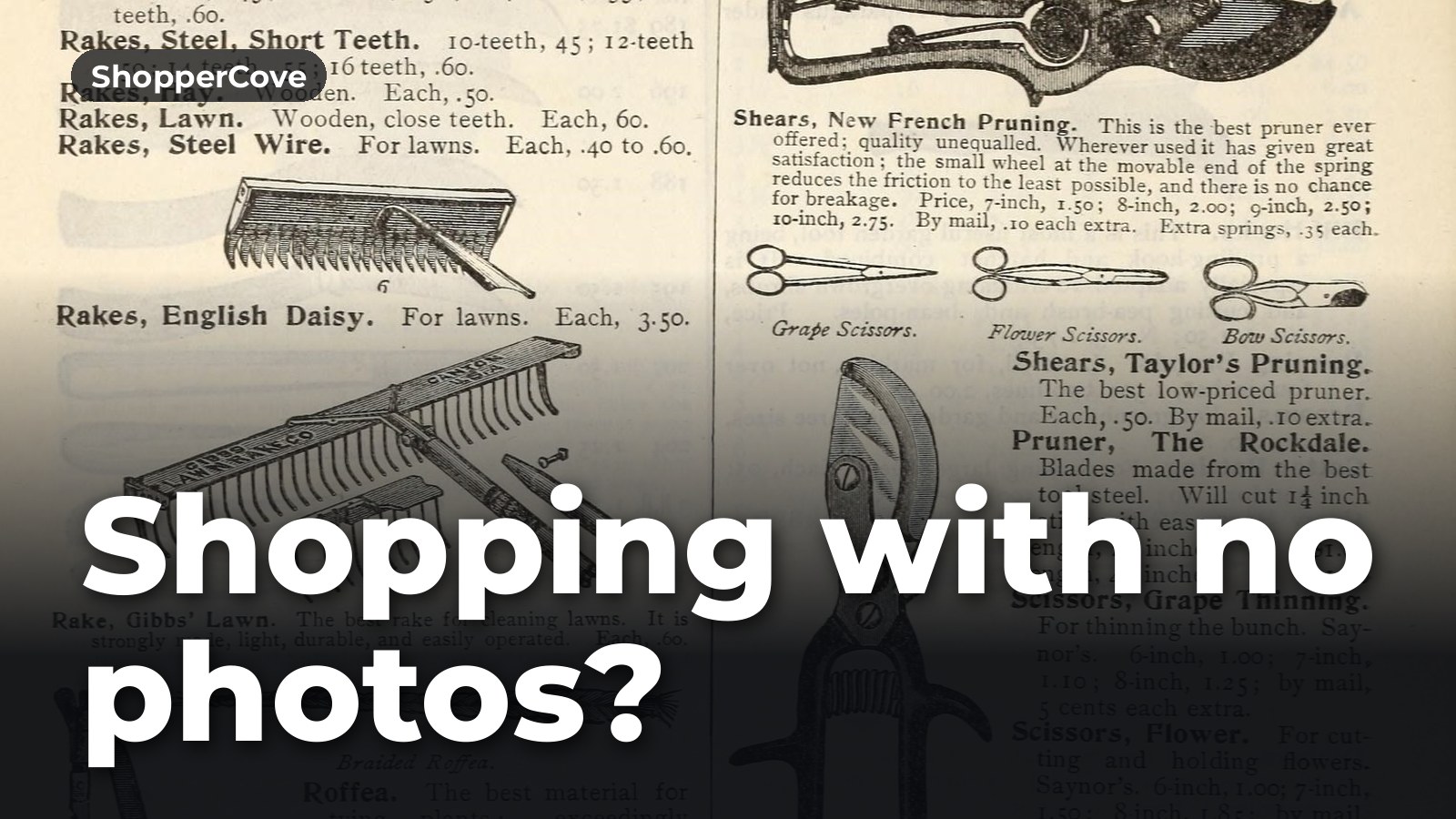
The catalog. Sears, Roebuck and Co. began as a mail-order catalog company. By 1894 its catalog had grown to 322 pages, with sewing machines, bicycles and sporting goods, and by 1895 it ran to 532 pages. Every one of those products had to be sold with pictures and text alone.
The manual. User guides usually combine a written guide and images, and hardware manuals lean on simplified diagrams. Until late in the 20th century, owner's manuals often included detailed repair information such as circuit diagrams.
The live demo. In the mid-1950s, Ron Popeil sold the Chop-O-Matic in a Woolworth's store in Chicago, standing 8 or 10 hours a day and doing six demonstrations an hour. "My vocal cords were so strained that I wouldn't want to talk to anybody when the day was over," he recalled. Around the same time, Brownie Wise built Tupperware's home party plan. She urged dealers to demonstrate the products, even throwing containers to show how durable they were. In 1949 her Detroit team sold more Tupperware than any store, and on her suggestion Tupperware was pulled from stores and sold only through parties.
The moment video took over the demo
Popeil's story shows exactly why video won. The Chop-O-Matic chopped vegetables so efficiently that salespeople couldn't carry enough of them for a full day of demonstrations. The solution was to tape the demonstration, and from there it was a short step to broadcasting it as a TV commercial.
That's the first big thing video added: a great demonstration could be recorded once and repeated endlessly without anyone's voice giving out. In the US, the format really expanded after 1984, when the Federal Communications Commission dropped limits on the length of TV commercials, which opened the door to program-length infomercials.
The web did the same thing again, cheaper. Seattle's Common Craft started making whiteboard-and-paper-cut-out explainers in 2007, and a video it made for Dropbox's homepage was viewed 25 million times. One person explaining one product, once, reached an audience no live demonstrator ever could.
What if it never happened?
Imagine the explainer video had never appeared. Here's what a seller's world would probably look like, based on how things worked before.
Product pages would be catalogs. Photos, diagrams, specs and careful copy would carry the whole load, the way they did for Sears. That's not hopeless. Richard Mayer, a learning researcher at the University of California, Santa Barbara, summarizes 13 experiments in which people learned much better from words and graphics than from words alone, and those graphics include illustrations next to text, not just animation.
Demonstration would stay in person, and it wouldn't scale. Popeil managed six demonstrations an hour. Wise's model needed a host, a living room and a dealer for every party. Products that need to be seen in action, like gadgets, software and anything with moving parts, would depend on trade shows, store demos and word of mouth.
Writing would matter even more. In Nielsen Norman Group's research on how people read websites, 79% of test users always scanned a new page and only 16% read word by word. Without video to fall back on, every product page would need to be scannable, with clear subheadings, one idea per paragraph and the conclusion first.
Manuals would carry more. Quick-start guides exist partly because full manuals grew too large. Without how-to videos, those guides and their diagrams would be the main way buyers learned to set up what they'd bought.
What words and pictures still do better
The what-if also works in reverse: some things never needed video.
- Scanning. Readers can jump to the one spec they care about. A video makes them scrub through.
- Search. A clear written page can match the exact question someone types.
- Updating. Changing a price or a feature in text takes seconds. Re-recording a video takes much longer.
- Choice. In Wyzowl's 2026 survey, 63% of consumers said a short video was how they'd most like to learn about a product or service. That's a majority, but it also means more than a third preferred something else.
Video is also no guarantee. Our look at the research in do whiteboard animation videos still work in 2026 finds encouraging but mixed evidence, and a poorly made video can do worse than a clear page.
The takeaway for sellers and creators
The history suggests that video didn't replace the older ways of explaining things. It recorded the best version of them. The Vitamix program was a demonstration, the Chop-O-Matic ad was a taped store pitch, and the doodle explainer is a chalk talk with a playback button.
So the practical lesson is to pair them:
- Write the page as if there were no video: scannable copy, clear photos, the key facts up top.
- Add a short video that does the one thing text can't, showing the product working or the idea unfolding step by step.
- Keep the video's script tight. A minute of narration is roughly 150 words, as covered in how whiteboard animation videos are made today.
- Check that both work on their own, for the reader who never presses play and the viewer who never scrolls.
Disclosure: some links are affiliate links; ShopperCove may earn a commission at no extra cost to you.
If you'd like to try the chalk-talk-with-a-playback-button approach without drawing skills, InstaDoodle is one option. Its offer page says it's a cloud app with nothing to install: you paste a script, its DoodleAI engine turns the words into doodle scenes, and you can record or upload your own voiceover. It also lists an AI image-to-sketch converter that turns your own product photos and logos into doodles, plus 16:9, 9:16 and square formats. ShopperCove did not test InstaDoodle for this article. InstaDoodle link: Open link (affiliate link)
Tools that help
- InstaDoodle, AI doodle and whiteboard explainer video app. Its offer page lists a lifetime deal for a one-time payment, with the price adjusted to your country and shown at checkout, 1,000+ doodle elements, 150 AI credits, 1080p export and a 60-day money-back guarantee. InstaDoodle link: Open link
How this was made: facts were gathered on 8 Oct 2026 (IST) from the Wikipedia articles on infomercials, product demonstrations, Ron Popeil, Brownie Wise, Sears, user guides, hawkers and Common Craft, plus Nielsen Norman Group, Richard Mayer's research summary and Wyzowl's 2026 survey, then written up with AI help and checked line by line against those sources. The "what if" sections are reasoned from that history, not predictions. ShopperCove did not test InstaDoodle for this article.
Sources
- 01en.wikipedia.org/wiki/Infomercial
- 02en.wikipedia.org/wiki/Product_demonstration
- 03en.wikipedia.org/wiki/Ron_Popeil
- 04en.wikipedia.org/wiki/Brownie_Wise
- 05en.wikipedia.org/wiki/Sears
- 06en.wikipedia.org/wiki/User_guide
- 07en.wikipedia.org/wiki/Hawker_(trade)
- 08en.wikipedia.org/wiki/Common_Craft
- 09nngroup.com/articles/how-users-read-on-the-web/
- 10unh.edu/teaching-learning-resource-hub/sites/default/files/media/2023-06/itow-research-based-principles-for-designing-multimedia-instruction-mayer.pdf
- 11wyzowl.com/video-marketing-statistics/
- 12instadoodle.com/cb-special
Related
Lab evidence
What I found running this
8 Oct 2026 IST: curl GET returned 200 for the eight Wikipedia articles, Nielsen Norman Group, the UNH Mayer PDF and Wyzowl. Popeil, Wise, Sears and Vitamix facts come from Wikipedia, so they are attributed to it where numbers appear. The InstaDoodle hop gave 307 to instadoodle.com/cb-special. We did not test InstaDoodle ourselves; claims come from its sales page.
Keep reading
Dhar Mann's Creator Deal Push at Advertising Week: What Small Creators Can Copy
Advertising Week New York expected around 2,500 creators (up from 1,000), named Dhar Mann its first chief creator officer and set a 100 million dollar creator-deal target for the next 12 months. What is pledged versus signed, Creator City, and seven steps small creators and small brands can copy.
News8 Oct 20267 min read
AI SEO for Answer Engines: ChatGPT, Perplexity & Google AI (2026)
A practical 2026 guide to answer-engine visibility across ChatGPT, Perplexity, and Google AI Overviews.
Summary1 Oct 20265 min read
What If Online Stores Had No Product Photos?
Mail-order giants sold stoves and bicycles from words and drawings, and the early web nearly started without inline images. A grounded what-if: which products would cope without photos, which would struggle, what research says photos actually do, and five lessons for sellers today.
News8 Oct 20266 min read